Main page › Guides › Federal prefab funding
Federal support for prefab housing — what has been funded
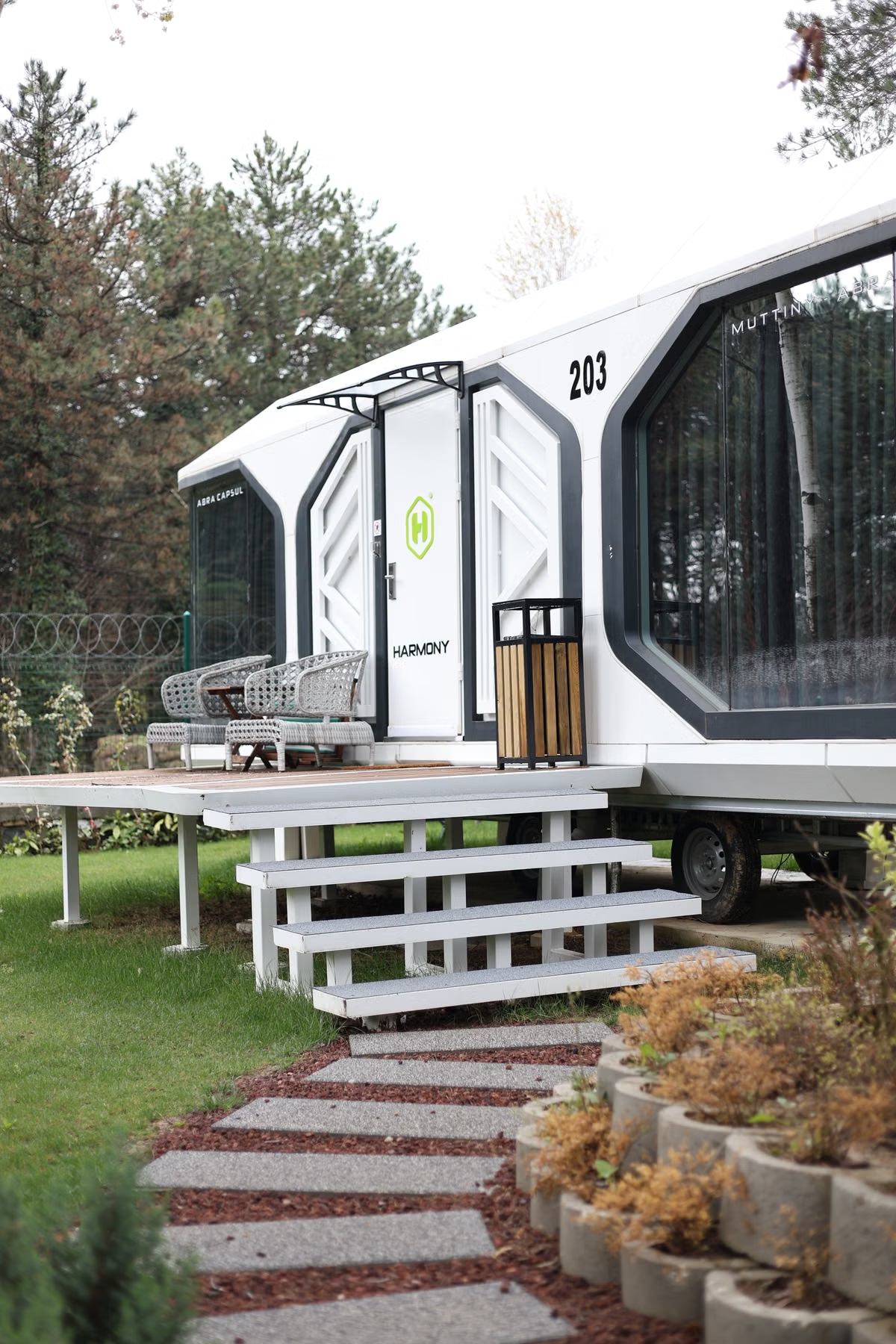 | |
| Illustrative stock image — not a depiction of any specific builder's product. | |
| 2025 budget package | A$54 m[1] |
|---|---|
| To states and territories | A$49.3 m[1] |
| Remainder | National certification process for off-site construction[1] |
| 2026 System 600 trials | A$39.3 m[2] |
| Productivity fund (Nov 2024) | A$900 m[3] |
| National housing target | 1.2 million homes in five years[3] |
Prefabricated construction has received sustained Commonwealth attention since 2024, framed as a response to the national target of 1.2 million new homes in five years.[3] This guide records what has been committed and what each commitment was for.
The 2025 budget package §
The 2025 federal budget committed A$54 million to prefabrication and modular construction, split into two parts: A$49.3 million for state and territory prefab programs, and the remainder to create a national certification process for off-site construction.[1]
The certification component is arguably the more structurally significant of the two. Inspection and approval regimes were designed around work performed on site; a national framework for certifying factory-built work addresses a genuine barrier rather than simply subsidising activity.
The announcement was made at Fleetwood's Smithfield facility, with Industry Minister Ed Husic stating that building a house in a factory rather than on site can cut construction time in half.[1]
System 600 trials, 2026 §
In May 2026 a further A$39.3 million was committed to trial the open-source "System 600" kit-of-parts platform developed with the Building 4.0 CRC.[2]
The open-source element is the notable feature. A shared, published set of standardised components lowers the barrier for smaller manufacturers, who otherwise each carry the cost of developing proprietary systems. Whether it achieves adoption at scale is not yet demonstrable.
The productivity fund §
In November 2024 the federal government announced a A$900 million productivity fund that rewards states for removing barriers to prefab and modular construction.[3] This is incentive funding directed at regulation rather than at construction — an acknowledgement that planning and approval frameworks, not manufacturing capacity alone, constrain uptake.
State-level commitments §
New South Wales has committed to 90 modular dwellings by mid-2026, and Queensland pledged 600 modular units.[4] Set against a national target of 1.2 million homes, these are pilot-scale programs — useful as demonstration and procurement signals rather than as material contributions to supply.
Summary §
| Date | Commitment | Amount | Purpose |
|---|---|---|---|
| Nov 2024 | Productivity fund | A$900 m | Rewards states for removing barriers[3] |
| 2025 budget | Prefab package — states | A$49.3 m | State and territory prefab programs[1] |
| 2025 budget | Prefab package — certification | balance of A$54 m | National certification for off-site construction[1] |
| May 2026 | System 600 trials | A$39.3 m | Open-source kit-of-parts platform[2] |
Reading this in context §
Policy attention is not the same as market change. Prefabrication remains at roughly 5 per cent of the Australian construction market, and academic reviewers have described the sector as nearly 15 years behind world leaders and as having grown more slowly than was predicted a decade ago.[5]
That history is the relevant caution. Recurring policy interest has not previously produced sustained growth, and the current round is recent enough that its effects cannot yet be assessed. For a household making a decision now, funding announcements are context rather than a reason to choose one construction method over another.
Sent to info@modularlivingaustralia.com.au and handled by a person. See Privacy.
References §
- Built Offsite / Australian Broker News — 2025 federal budget — A$54 million for prefabrication and modular construction, comprising A$49.3 million for state and territory prefab programs and the remainder to create a national certification process for off-site construction; announced at Fleetwood's Smithfield facility; Industry Minister Ed Husic said factory building can cut construction time in half. builtoffsite.com.au/news/federal-government-backs-prefabrication-and-modular-construction-with-54-million-boost/
- Built Offsite — May 2026 — A$39.3 million committed to trial the open-source "System 600" kit-of-parts platform developed with the Building 4.0 CRC. builtoffsite.com.au/news/federal-government-commits-39-3m-to-open-source-prefab-housing-system-trials/
- Redland Bayside News / ArchitectureAu — Budget coverage including Housing Minister Clare O'Neil's statement that prefab methods can build homes up to 50 per cent faster, the national target of 1.2 million new homes in five years, and the A$900 million productivity fund announced in November 2024 rewarding states for removing barriers to prefab and modular construction. redlandbaysidenews.com.au/government-boosts-prefabricated-housing/
- Prefab News Australia / Mordor Intelligence — State-level commitments — New South Wales committing to 90 modular dwellings by mid-2026 and Queensland pledging 600 modular units; market value ≈US$8.35 bn (2025) rising to ≈US$13.17 bn by 2031. mordorintelligence.com/industry-reports/australia-prefabricated-buildings-industry
- ScienceDirect — "Mapping a decade of prefabrication policy in Australia" (2026) — prefabrication at roughly 5% of the Australian construction market; Australian prefabrication described as nearly 15 years behind world leaders and having grown more slowly than predicted a decade ago. sciencedirect.com/org/science/article/pii/S0969998826000135
Figures are as published by the sources above at their respective dates and are paraphrased summaries, not verbatim reproductions. Verify current pricing and rules directly with builders, lenders and planning authorities.