Main page › Industry trends
Industry trends
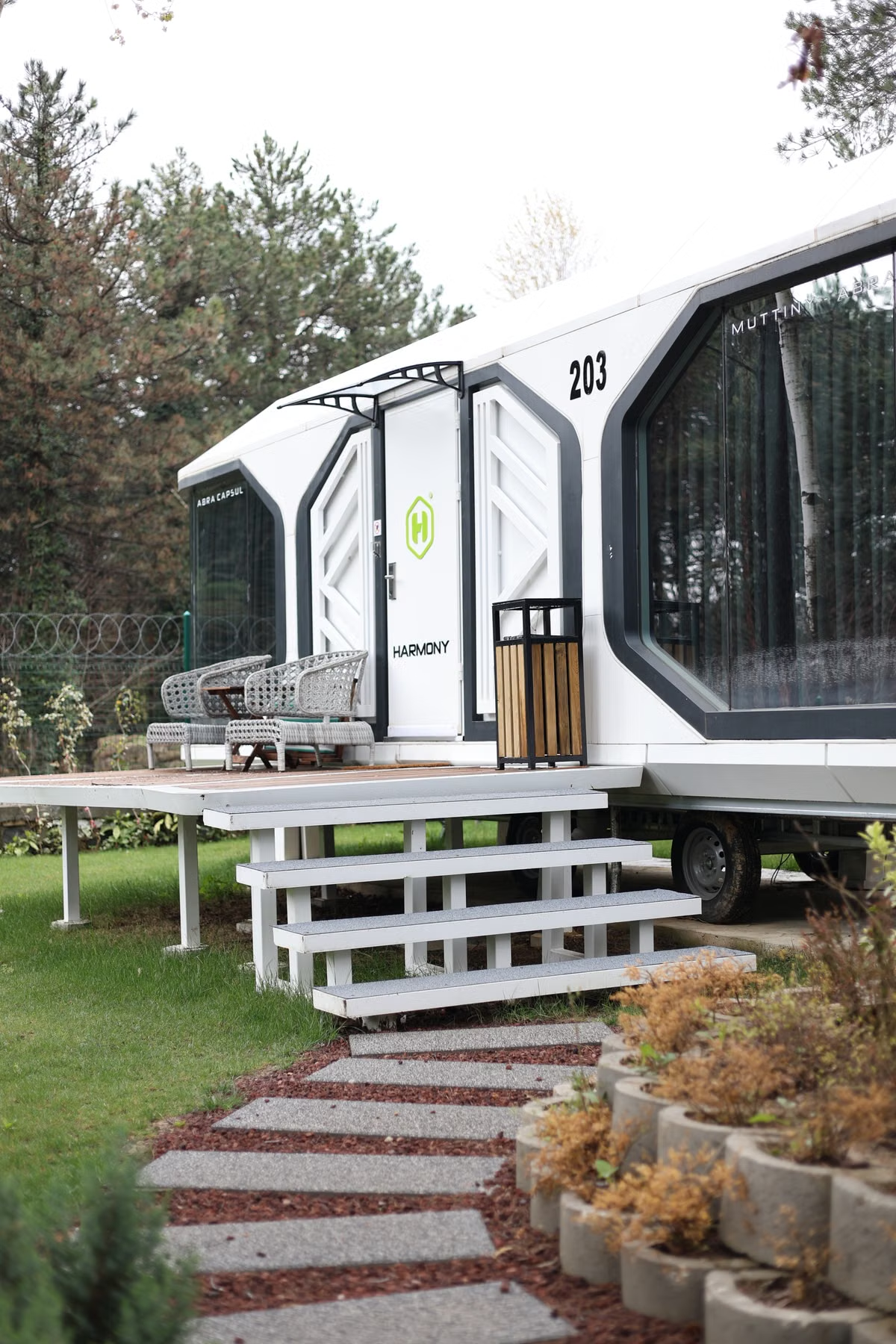 | |
| Illustrative stock image — not a depiction of any specific builder's product. |
Australian prefabrication sits at a low base by international standards but is receiving unusual policy attention. Federal and state governments have committed funding to the sector against a national target of 1.2 million new homes in five years, and a national certification process for off-site construction is in development.
Whether that translates into meaningful market share is an open question. Academic reviewers have noted that Australian prefabrication has grown more slowly than was predicted a decade ago, despite recurring policy interest.
Guides in this category track published policy announcements, market-research estimates and international comparisons — separating what has been funded from what has been announced, and both from what has actually been built.
Key considerations
- Announced funding and delivered housing are different things
- Market-research forecasts are estimates, not outcomes
- International comparisons involve different definitions of prefabrication
- Policy interest has recurred before without producing sustained growth
Guides in this category
- Importing a prefab home into Australia 12 Oct 2026
- What Australia imports in prefabricated buildings 12 Oct 2026
- Queensland expands its Cairns modular housing factory 5 Sep 2026
- Western Australia awards $49 million to 15 housing manufacturers 5 Sep 2026
- Tasmania drafts a state guarantee for loans on homes still in the factory 4 Sep 2026
- A think tank wants modular housing at 35% of construction — and federal finance is already flowing to factories 31 Aug 2026
- Modular granny flats and the rise of multi-generational living 31 Aug 2026
- NSW passes Australia's first regulatory framework for prefabricated buildings 13 Aug 2026
- How off-site homes are actually made 20 Jul 2026
- How Australia compares internationally on prefab housing 19 Jul 2026
- Federal support for prefab housing — what has been funded 19 Jul 2026
Related categories
- Modular homes — Homes built as three-dimensional modules in a factory, transported and assembled on site as permanent dwellings.
- Prefabricated homes — Walls, floors and roof elements manufactured flat in a factory, then assembled on site.
- Granny flats — Self-contained secondary dwellings on the same lot as a principal home.
- Tiny homes — Compact dwellings, fixed or on wheels, typically 15–55 m².
- Transportable homes — Factory-built homes engineered so they can be relocated after installation.
- Materials & construction — What off-site homes are built from — steel, timber, panels, concrete — and how the method shapes the result.
- Costs & planning — Prices, site works, approvals and the pathways that apply in each state.
- Buying guides — Comparing builders, reading contracts, and what to check before signing.
- Finance — How lenders treat off-site construction and how progress payments differ.
- Rural builds — Remote sites, access constraints and why off-site construction suits difficult blocks.
- Updates — Regulatory, policy and market changes affecting prefabricated and modular housing in Australia, and who they bear on.
- Tools — Interactive checklists and lookup tools for planning a modular, prefab or secondary dwelling build.
Sent to info@modularlivingaustralia.com.au and handled by a person. See Privacy.