Main page › Guides › Inside the factory
How off-site homes are actually made
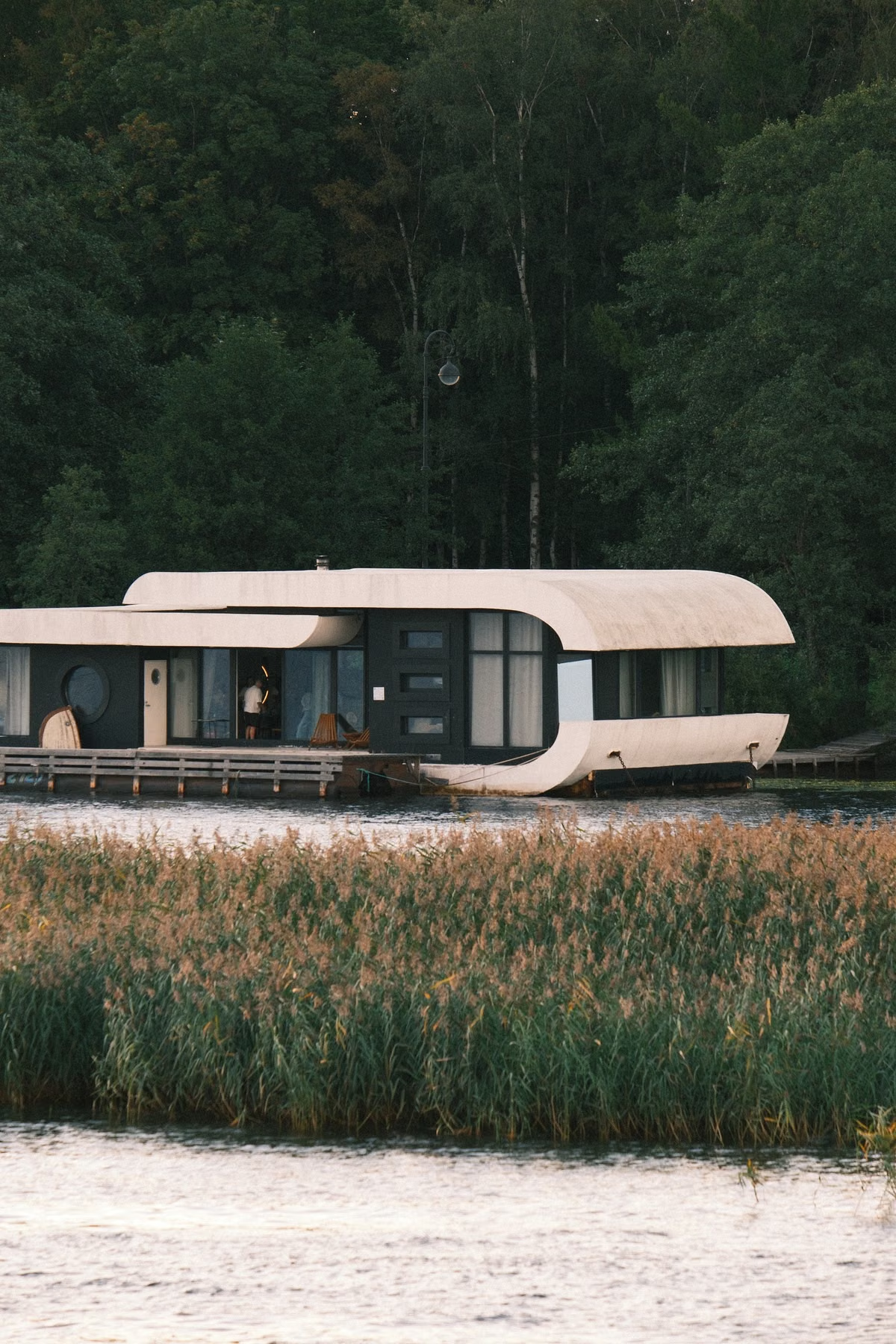 | |
| Illustrative stock image — not a depiction of any specific builder's product. | |
| Factory build window | ≈ 8–14 weeks[1] |
|---|---|
| Runs in parallel with | Site preparation and foundations |
| Panelised share of market | Just over half (2025)[2] |
| Certification | National process funded in 2025 budget[3] |
| Open-source platform | System 600 trials, A$39.3 m (2026)[3] |
The case for off-site construction rests on a claim about conditions: that building indoors, in a fixed location, with repeatable processes, produces a better and more predictable result than building outdoors on a different site every time. This guide sets out the logic behind that claim and what it means for a buyer.
The parallel timeline §
The most consequential feature is not any individual process but the scheduling. While the factory builds, your site is being cleared, engineered and prepared. Published guidance puts factory manufacturing at roughly 8 to 14 weeks depending on module count and finish.[1]
In a conventional build, that same work would have to wait for the site to be ready. Running the two streams simultaneously is where most of the timeline advantage comes from — not from any single task being performed faster.
Two production models §
Volumetric production builds complete three-dimensional modules, which move progressively through workstations. Frame, then cladding and roofing, then services, then internal lining, then fit-out — often including kitchens and bathrooms — before the module is wrapped for transport.
Panelised production builds flat wall, floor and roof elements, which are stacked and delivered for assembly on site. Panelised and componentised systems accounted for just over half of the Australian prefabricated-buildings market in 2025.[2]
The trade-off is consistent: volumetric maximises factory completion and minimises on-site work but is constrained by transport dimensions; panelised transports efficiently and allows more design freedom but requires a full on-site trade sequence to finish.
Why controlled conditions matter §
- Weather. Materials are not exposed during construction, and work does not stop for rain.
- Repeatability. Jigs and fixed workstations produce consistent tolerances more reliably than measuring and cutting in situ.
- Sequencing. Trades are available when the schedule requires them, rather than when they can fit the site in.
- Waste and energy. Victorian state reporting cited by market researchers indicates 60 per cent lower in-process energy with prefabrication, alongside 40 to 50 per cent faster build times.[2]
What still happens on your land §
Off-site does not mean no site work. Regardless of production model, the block still requires soil testing, engineering, clearing, levelling, foundations, service connections and external works — and delivery day requires transport and usually a crane. These costs are quoted separately from the factory build and are where most budget variation occurs.[4]
Certification is developing §
Inspection regimes designed for on-site construction do not map neatly onto work completed in a factory in another state. This is a recognised gap: the 2025 federal budget included funding to create a national certification process for off-site construction, and in May 2026 a further A$39.3 million was committed to trial the open-source System 600 kit-of-parts platform developed with the Building 4.0 CRC.[3]
Until that framework matures, it is reasonable to ask any builder directly: who inspects the factory work, at what stages, and what documentation comes with the finished home?
Questions worth asking §
- Can I visit the factory, and can I see a module at each stage of production?
- Is production volumetric, panelised, or a mix?
- What proportion of the finished home leaves the factory complete?
- Who certifies factory work, and at which hold points?
- How are modules protected during transport, and who bears transit risk?
- What documentation, warranties and as-built drawings are provided at handover?
Sent to info@modularlivingaustralia.com.au and handled by a person. See Privacy.
References §
- Ecoprestige — 2026 modular construction cost guide — factory manufacturing windows of about 8–14 weeks depending on module count and finish; module-side critical path of roughly 4–6 months for projects up to 30 modules against 9–14 months traditional. ecoprestige.com.au/modular-construction-costs-australia-price-guide-builders-developers-2026/
- Prefab News Australia / Mordor Intelligence — Australian prefabricated buildings market — panelised and componentised systems just over half the market in 2025; Victoria reporting 40–50% faster build times and 60% lower in-process energy with prefabrication. mordorintelligence.com/industry-reports/australia-prefabricated-buildings-industry
- Built Offsite — 2025 federal budget — A$54 million including funding to create a national certification process for off-site construction; May 2026 — a further A$39.3 million to trial the open-source "System 600" kit-of-parts platform developed with the Building 4.0 CRC. builtoffsite.com.au/news/federal-government-commits-39-3m-to-open-source-prefab-housing-system-trials/
- Built by Modify — 2026 modular cost guide — the separation between factory-stage and site-stage work and costs; crane hire and delivery-day costs; transport sometimes included only within a set radius. builtbymodify.com.au/blogs/modular-home-cost
Figures are as published by the sources above at their respective dates and are paraphrased summaries, not verbatim reproductions. Verify current pricing and rules directly with builders, lenders and planning authorities.