Main page › Guides › Modular vs traditional
Modular versus traditional construction compared
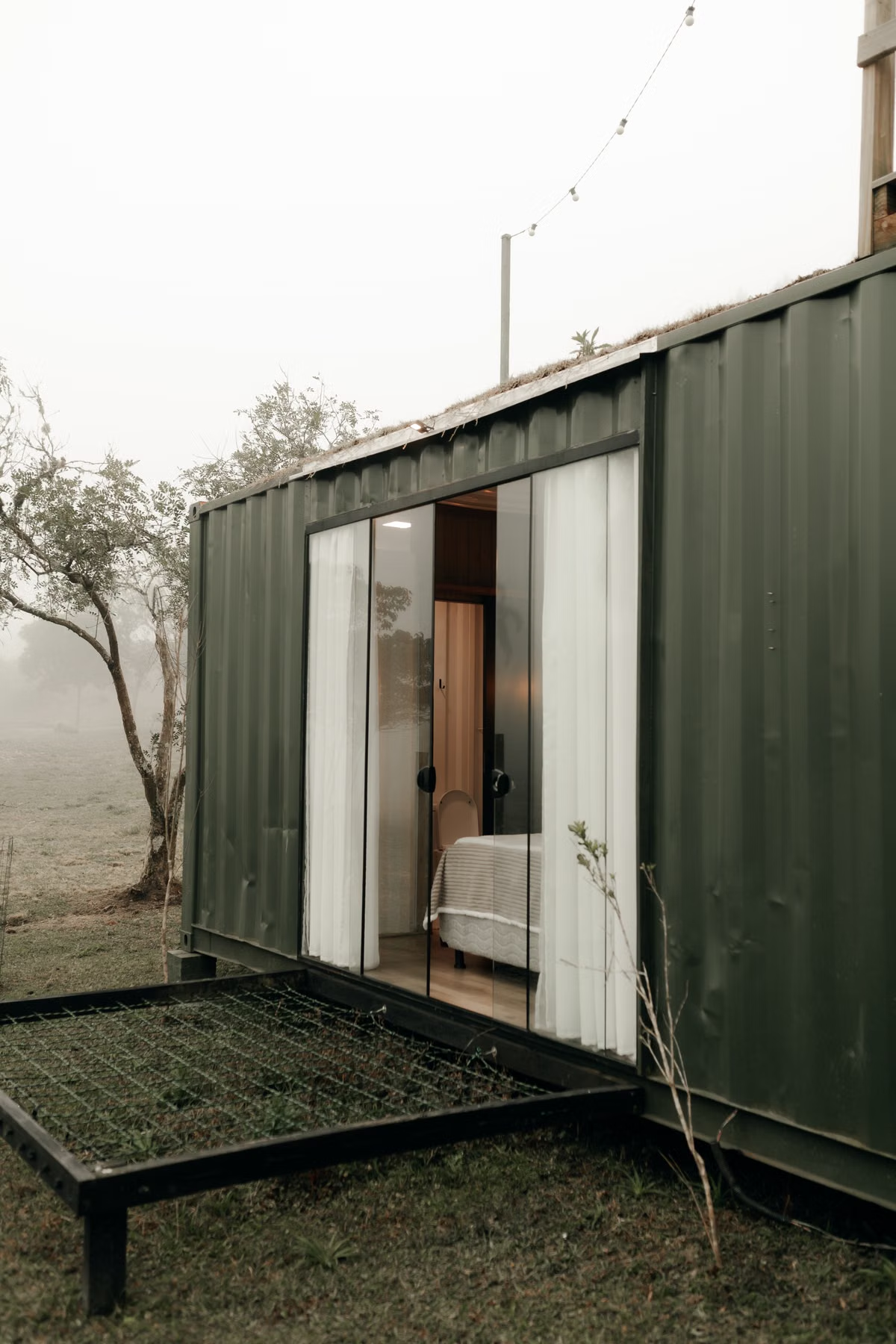 | |
| Illustrative stock image — not a depiction of any specific builder's product. | |
| Factory build window | ≈ 8–14 weeks[1] |
|---|---|
| Modular critical path | ≈ 4–6 months (≤30 modules)[1] |
| Traditional comparison | ≈ 9–14 months[1] |
| Conventional new house, national average (ABS) | 3.3 quarters (≈ 9 months, 4 weeks), June quarter 2024[2] |
| Government estimate | Up to 50% faster[3][4] |
| Victoria state reporting | 40–50% faster; 60% lower in-process energy[5] |
| Main modular constraint | Module size limited by road transport[6] |
One commercial cost guide puts factory manufacturing of a modular home at about 8–14 weeks and the module-side critical path at roughly 4–6 months for projects of up to 30 modules, against 9–14 months for comparable traditional construction.[1] For comparison, the ABS put the average time from commencement to completion for a new house at 3.3 quarters, about nine months and four weeks, in the June quarter 2024.[2] The main constraint on modular construction is that module size is limited by road transport.[6]
The comparison between modular and traditional construction is usually framed as a question of speed. That is part of it, but the more useful framing is sequence: modular construction moves most of the labour off the site and runs it in parallel with site preparation, while traditional construction runs everything on the block in series.
Almost everything else — the advantages and the constraints — follows from that single difference.
Timelines §
Ecoprestige's 2026 guide puts factory manufacturing at about 8 to 14 weeks depending on module count and finish, and the module-side critical path at roughly four to six months for projects up to 30 modules, against nine to fourteen months for comparable traditional construction.[1]
Government figures are broader. Industry Minister Ed Husic said in 2025 that building a house in a factory rather than on site can cut construction time in half, and Housing Minister Clare O'Neil described prefab methods as up to 50 per cent faster.[3][4] Victorian state reporting cited by market researchers puts the improvement at 40 to 50 per cent, with 60 per cent lower in-process energy.[5]
The only measured national benchmark for conventional building comes from the Australian Bureau of Statistics. New houses took an average of 3.3 quarters — about nine months and four weeks — from commencement to completion in the June quarter 2024, up from 2.2 quarters in September 2019.[2] That measure excludes approval and the wait before construction starts, so it is not directly comparable with a modular builder's factory window. The comparison is set out in how long a modular home takes to build.
Cost certainty §
This is arguably the more substantive advantage, and it receives less attention than speed. A factory contract prices a defined product built under controlled conditions. Weather delays, trade availability and on-site rework — the recurring sources of variation in conventional building — largely do not apply to the factory portion of the work.
The qualification is that the factory portion is not the whole project. Site works, transport, crane hire and connections remain site-specific and variable, and it is on that side of the fence that cost surprises tend to appear. Built by Modify notes that transport and installation are sometimes included only within a set radius of the factory.[7]
Design freedom §
Here traditional construction has the clear advantage. A modular home is assembled from three-dimensional sections that must travel by road, so module width, height and length are bounded by what is legally and physically transportable.[6] That constrains room proportions, ceiling heights and the extent to which open-plan spaces can cross module joins.
Panelised prefabrication sits between the two: flat panels transport more efficiently and impose fewer dimensional limits, at the cost of more on-site finishing work. Panelised and componentised systems made up just over half of Australia's prefabricated-buildings market in 2025.[5]
Difficult and remote sites §
This is where the modular case is strongest. On a remote block, a conventional build requires trades to travel repeatedly over many months, and that travel — along with the difficulty of scheduling it — often becomes the largest single cost factor. Modular construction reduces the site to a much smaller number of visits.
The trade-off moves to logistics: delivery distance, road access, corner radii, overhead power lines and crane positioning. Built by Modify puts crane hire at roughly A$260 to A$1,530 per hour, and notes remote or complex lifts can push delivery-day totals to roughly A$23,000 to A$30,600.[7]
Side by side §
| Dimension | Modular / off-site | Traditional on-site |
|---|---|---|
| Sequence | Factory build runs in parallel with site preparation | Sequential; each stage waits for the last |
| Timeline | ≈4–6 months module-side critical path[1] | ≈9–14 months comparable[1]; ABS national average 3.3 quarters from construction start (June quarter 2024)[2] |
| Cost certainty | Higher for the factory portion; site works still variable | Lower; variations and delays common |
| Design freedom | Constrained by module dimensions and transport routes[6] | Effectively unconstrained |
| Quality control | Factory conditions; repeatable tolerances | Varies with site, weather and crews |
| Remote sites | Strong — few site visits required | Costs escalate with distance |
| Delivery-day risk | Concentrated: crane, access, power lines[7] | Distributed across the build |
| Finance | Lender policies vary; factory-stage payments differ[6] | Standard construction loans well established |
Market context §
It is worth keeping the scale in perspective. Research reviews place prefabrication at roughly 5 per cent of the Australian construction market, and describe Australian prefabrication as nearly 15 years behind world leaders, having grown more slowly than was predicted a decade ago.[8] Traditional construction remains the default for good practical reasons, including a deeper pool of builders, established finance products, and familiarity among certifiers and councils.
Which suits which situation §
- Modular tends to suit — remote or access-limited blocks, buyers who value timeline and cost certainty over bespoke design, secondary dwellings, and repeatable designs.
- Traditional tends to suit — complex or highly bespoke designs, difficult-to-crane sites, heavily constrained urban infill, and buyers whose finance is already arranged around a standard construction loan.
- Panelised prefab sits between — more design freedom than volumetric modules, less factory completion.
The decision is usually settled by the site rather than by preference. Assess access, slope and distance first; those facts eliminate options faster than any comparison table.
What is not covered here §
There is no published, measured series for modular home build times in Australia, so the modular timelines above are commercial and ministerial figures rather than measured averages. The ABS benchmark describes conventional houses from construction start to completion and excludes approval time. Cost comparisons between the two methods are covered in are modular homes cheaper; this page does not compute a cost or time difference from figures published by different sources.
Sent to info@modularlivingaustralia.com.au and handled by a person. See Privacy.
References §
- Ecoprestige — 2026 modular construction cost guide — factory manufacturing windows of about 8–14 weeks; module-side critical path of roughly 4–6 months for projects up to 30 modules, against 9–14 months for comparable traditional construction. ecoprestige.com.au/modular-construction-costs-australia-price-guide-builders-developers-2026/
- Australian Bureau of Statistics — Home building through the pandemic, released 19 November 2024. The average time from commencement to completion for new houses rose from 2.2 quarters (about six months, three weeks) in the September quarter 2019 to 3.3 quarters (about nine months, four weeks) in the June quarter 2024, with Western Australia the longest at 4.9 quarters. abs.gov.au/articles/home-building-through-pandemic
- Built Offsite / Australian Broker News — 2025 federal budget coverage — Industry Minister Ed Husic said building a house in a factory rather than on site can cut construction time in half. builtoffsite.com.au/news/federal-government-backs-prefabrication-and-modular-construction-with-54-million-boost/
- Redland Bayside News — Budget coverage including Housing Minister Clare O'Neil's statement that prefab methods can build homes up to 50 per cent faster. redlandbaysidenews.com.au/government-boosts-prefabricated-housing/
- Prefab News Australia / Mordor Intelligence — Victoria reporting 40–50% faster build times and 60% lower in-process energy with prefabrication; panelised and componentised systems just over half the Australian prefabricated-buildings market in 2025. mordorintelligence.com/industry-reports/australia-prefabricated-buildings-industry
- Wright Choice Homes — Modular home overview — modules are transported by road; wheeled and transported units are constrained by road dimensions; lender treatment of modular builds varies between institutions. wrightchoicehomes.com.au/blog/how-much-do-modular-homes-cost/
- Built by Modify — 2026 modular cost guide — transport and installation sometimes included only within a set radius of the factory; crane hire roughly A$260–$1,530 per hour; remote or complex lifts pushing delivery-day totals to roughly A$23,000–$30,600. builtbymodify.com.au/blogs/modular-home-cost
- ScienceDirect — "Mapping a decade of prefabrication policy in Australia" (2026) — prefabrication at roughly 5% of the Australian construction market; Australian prefabrication described as nearly 15 years behind world leaders and growing more slowly than predicted a decade ago. sciencedirect.com/org/science/article/pii/S0969998826000135
Figures are as published by the sources above at their respective dates and are paraphrased summaries, not verbatim reproductions. Verify current pricing and rules directly with builders, lenders and planning authorities.