Main page › Guides › Tiny homes
Tiny homes in Australia — sizes, road limits and costs
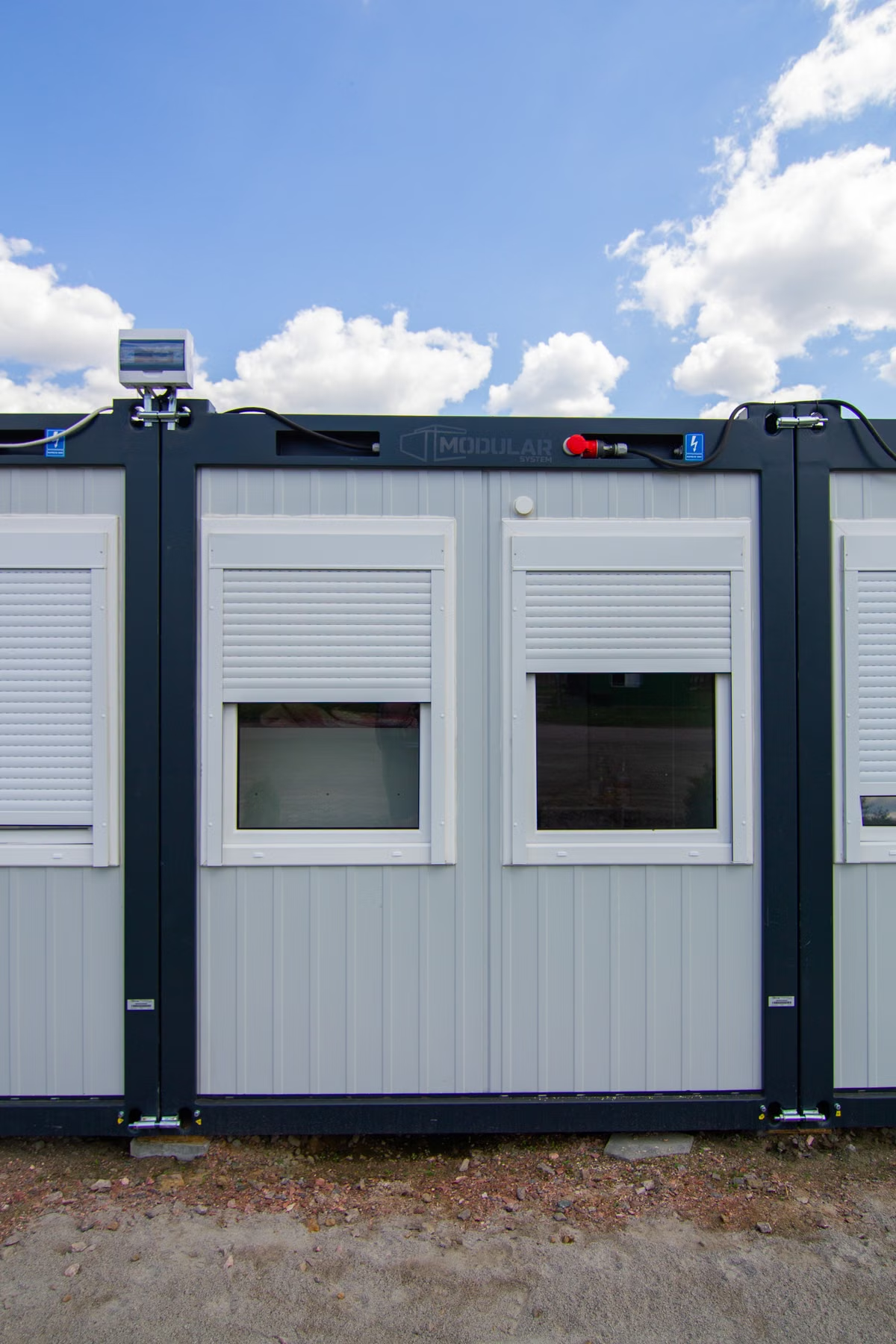 | |
| Illustrative stock image — not a depiction of any specific builder's product. | |
| Typical size | ≈ 15–55 m²[1] |
|---|---|
| Road height limit | ≈ 4.3 m[1] |
| Road width limit | ≈ 2.5 m[1] |
| Road length limit | ≈ 9 m[1] |
| Custom build cost | ≈ A$85,000 – $160,000+[2] |
| Turnkey range | ≈ A$101,900 – $163,900[2] |
| Finance | Often personal or vehicle lending, not a mortgage[3] |
Australian tiny homes are typically between 15 and 55 m².[1] More important than the size, though, is a distinction that determines almost everything else: whether the home sits on a fixed foundation or on wheels.
Fixed versus wheeled §
A tiny home on a fixed foundation is a dwelling. It requires the same approvals as any other small building, must comply with the National Construction Code, and is treated as part of the real property.[4]
A tiny home on wheels may be classified as a vehicle or caravan rather than a building. That changes the approval process, the insurance product, the finance available, and in many councils how long it may legally be occupied in one location.
Buyers frequently discover this distinction after purchase rather than before, which is the wrong order. It should be the first question resolved.
Road limits shape the design §
For wheeled units, published guidance indicates that to travel without special permits a home generally needs to stay within about 4.3 m height, 2.5 m width and roughly 9 m length.[1] Those three numbers dictate ceiling heights, the viability of a loft, internal width, and total floor area.
Exceeding them is possible but introduces oversize permits, escort requirements and route restrictions — costs that recur every time the home is moved.
Costs §
| Type | Published range | Source |
|---|---|---|
| Custom build | ≈ 85,000 – 160,000+ | LJM Tiny Homes[2] |
| Turnkey | ≈ 101,900 – 163,900 | Aussie Tiny Houses[2] |
What these figures generally exclude: land, site preparation, connection to power and water, on-site wastewater treatment, transport beyond an included radius, and any approval costs. On an unserviced rural block, those can add a substantial proportion of the purchase price again.
Finance is the biggest practical difference §
Because a tiny home on wheels is often not classed as real property, it may not qualify for a standard mortgage. Published guidance notes buyers frequently use personal or vehicle-style lending instead.[3]
The consequence is easy to underestimate. Personal and vehicle loans typically carry higher interest rates and much shorter terms than a mortgage, so the monthly cost of a A$120,000 tiny home can be considerably higher than the monthly cost of A$120,000 of mortgage debt. A low purchase price does not automatically mean low ongoing cost.
Where you can put one §
This is the question with the least generalisable answer. Rules vary by council and depend on classification, whether the site has a principal dwelling, whether occupation is permanent or temporary, and local caravan and camping provisions. Some councils are explicitly accommodating; others have no framework for it at all.
Practical approach: identify the specific block first, ask the council directly what is permitted there, and only then design or purchase.
Common uses §
- First home or downsizing — lower entry cost, where land is already available
- Secondary accommodation — for family on an existing property, though a granny flat may be the better-defined pathway
- Short-stay accommodation — subject to council rules on short-term letting
- Rural or off-grid living — where services must be provided independently
Questions before buying §
- Fixed or wheeled — and how will the council classify it?
- Can I legally occupy it permanently at the intended location?
- What finance is available, at what rate and over what term?
- What does the quoted price exclude — services, transport, site works?
- If off-grid, what do power, water and wastewater systems cost?
- What is the realistic resale market in that region?
Sent to info@modularlivingaustralia.com.au and handled by a person. See Privacy.
References §
- Wright Choice Homes — Tiny home definitions — Australian tiny homes typically 15–55 m²; wheeled versions must respect road limits of about 4.3 m height, 2.5 m width and roughly 9 m length to travel without special permits. wrightchoicehomes.com.au/blog/how-much-do-modular-homes-cost/
- LJM Tiny Homes / Aussie Tiny Houses — 2026 tiny home cost guides — roughly A$85,000 to A$160,000+ for custom builds; turnkey ranges of about A$101,900–$163,900. Builder-published commercial guidance. ljmtinyhomes.com.au/how-much-does-a-tiny-home-cost-in-australia/
- Savings.com.au — Tiny homes overview — tiny homes are often financed through personal or vehicle-style loans rather than standard mortgages, because a dwelling on wheels may not be classed as real property. savings.com.au/property/tiny-houses
- Granny Flat Guide — Regulations overview — the National Construction Code sets the national baseline for building work, with state and council planning instruments applying on top. grannyflatguide.com/regulations/
Figures are as published by the sources above at their respective dates and are paraphrased summaries, not verbatim reproductions. Verify current pricing and rules directly with builders, lenders and planning authorities.