Main page › Guides › QLD granny flat rules
Granny flat rules in Queensland
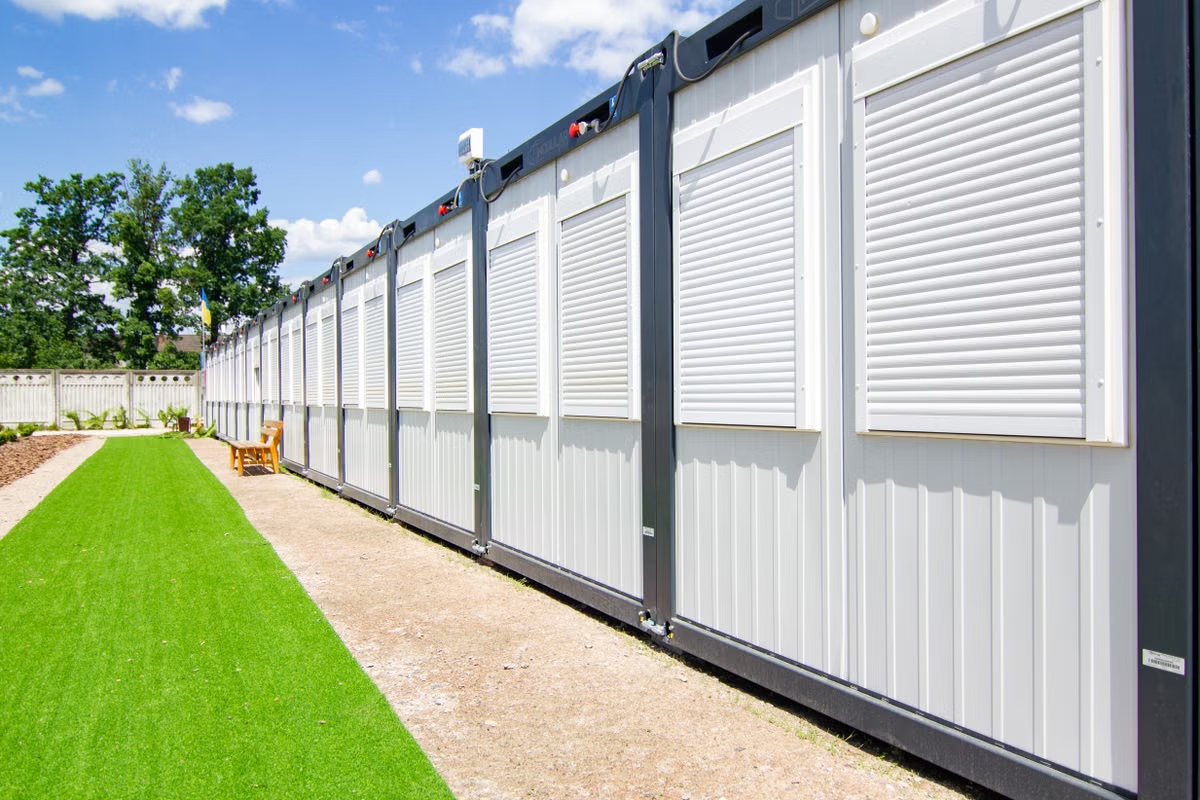 | |
| Illustrative stock image — not a depiction of any specific builder's product. | |
| Planning term | Secondary dwelling[1] |
|---|---|
| Common size allowance | ≈ 80 m²[2] |
| Rule source | Local planning schemes — varies by council[1] |
| Renting to non-family | Occupancy restrictions removed in 2022[1] |
| National baseline | National Construction Code applies[2] |
Queensland uses the planning term secondary dwelling, though councils and households generally say granny flat.[1] Two features distinguish the Queensland framework from the southern states.
Rules come from councils, not the state §
Unlike New South Wales, where a single state planning policy sets a clear numeric threshold, Queensland's size and siting rules come largely from local planning schemes — and they vary markedly between councils.[1]
Published guidance indicates most councils allow secondary dwellings up to about 80 m², which is more generous than the 60 m² common in NSW and Victoria.[2] But 80 m² is a description of common practice rather than a statewide rule, so the figure that matters is whatever your specific council's scheme says.
The practical consequence: for a Queensland project, the council's planning scheme is the primary document, and general guidance — including this page — is only an orientation.
The 2022 occupancy change §
Queensland previously restricted who could occupy a secondary dwelling, generally limiting it to members of the same household. Those occupancy restrictions were removed in 2022, so a secondary dwelling can now generally be rented to anyone, subject to approvals and compliance.[1]
This was the change that made secondary dwellings viable as an income proposition in Queensland rather than only as family accommodation.
What still applies §
| Item | Position |
|---|---|
| Planning term | Secondary dwelling[1] |
| Size | Set by local planning scheme; commonly around 80 m²[2] |
| Occupancy | No family-only restriction since 2022[1] |
| Building standard | National Construction Code[2] |
| Self-contained | Own entrance, kitchen, bathroom and living area[3] |
Practical approach for a Queensland site §
- Find your council's planning scheme and locate the secondary dwelling provisions — size cap, setbacks, site cover, parking.
- Confirm the zone and any overlays affecting the property (flood, bushfire, character, vegetation).
- Establish whether the proposal is accepted development, code assessable or impact assessable under that scheme — this determines timeline and cost.
- Confirm current occupancy and short-stay letting rules if income is part of the plan.
- Then compare designs and builders.
Comparison with other states: granny flat rules by state.
Sent to info@modularlivingaustralia.com.au and handled by a person. See Privacy.
References §
- Fundd — Granny flat rules Australia 2026 — in Queensland the statewide planning language is "secondary dwelling"; occupancy restrictions were removed in 2022 so a secondary dwelling can generally be rented to anyone, subject to approvals and compliance; size and siting rules often still come from local planning schemes and can vary markedly by council. fundd.com.au/granny-flat-rules-australia-in-2026/
- Granny Flat Guide — Granny flat regulations — Queensland councils commonly allow secondary dwellings up to about 80 m²; the National Construction Code applies nationally with state and council planning instruments on top. grannyflatguide.com/regulations/
- Buildana — Secondary dwelling definition — self-contained with its own entrance, kitchen, bathroom and living area, on the same lot as the principal home. buildana.com.au/guides/granny-flat-nsw
Figures are as published by the sources above at their respective dates and are paraphrased summaries, not verbatim reproductions. Verify current pricing and rules directly with builders, lenders and planning authorities.