Main page › Guides › TAS, ACT & NT rules
Granny flat rules in Tasmania, the ACT and the Northern Territory
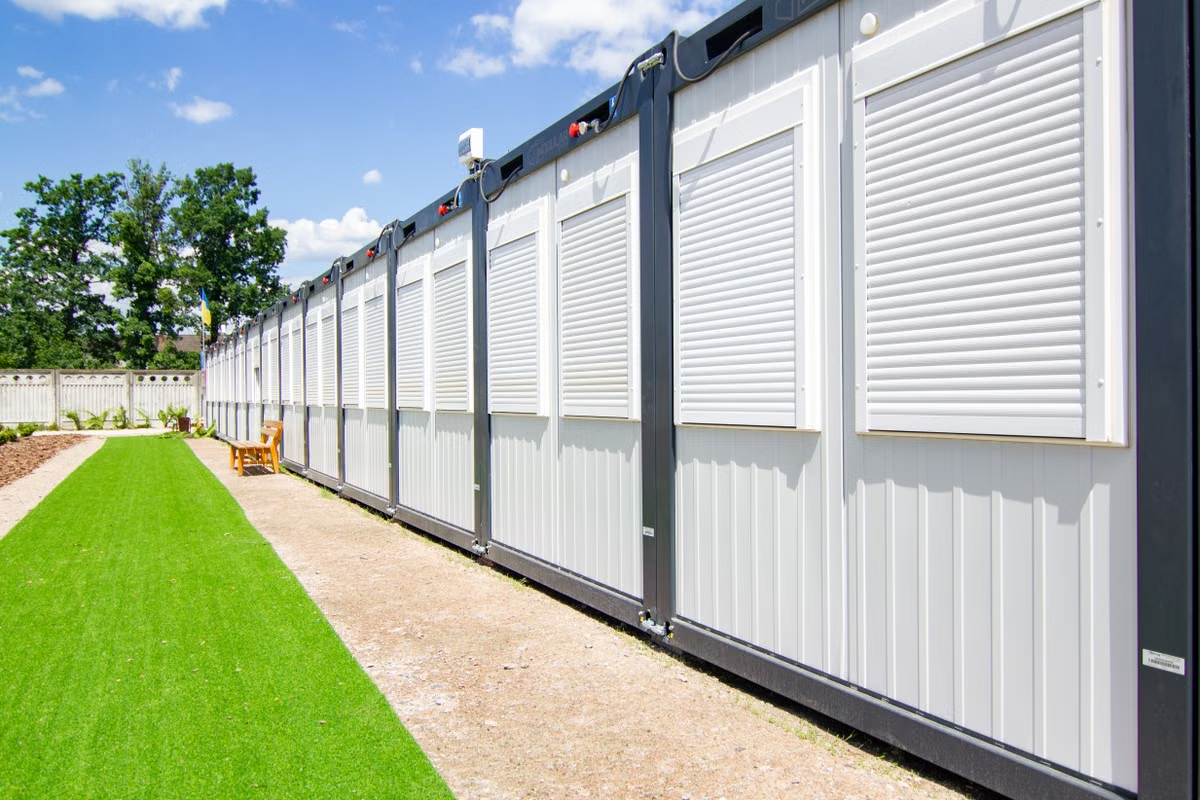 | |
| Illustrative stock image — not a depiction of any specific builder's product. | |
| Tasmania — term | Secondary residence[1] |
|---|---|
| Tasmania — current limit | 60 m² gross floor area[2] |
| Tasmania — draft amendment | Increase to 90 m²[2] |
| Tasmania — status | Exhibited 10 June–22 July 2026[3]; hearings scheduled 16–17 September 2026, no decision as at 30 September 2026[4] |
| ACT — term | Secondary residence[1] |
| ACT — maximum size | 90 m², measured to the outside face of external walls[5] |
| ACT — minimum block | 500 m²; one per block[5] |
| Northern Territory — term | Independent unit (dwelling – independent)[6] |
| Northern Territory — maximum size | 75 m² in certain zones, since 1 December 2023[6] |
In Tasmania a granny flat, called a secondary residence, is limited to 60 m² gross floor area; a draft amendment to raise the limit to 90 m² had hearings in September 2026 but no decision as at 30 September 2026, so the 60 m² limit still applies.[2][4] In the ACT a secondary residence can be up to 90 m², measured to the outside face of the external walls, with one per block on blocks of at least 500 m².[5] In the Northern Territory an independent unit can be up to 75 m² in certain zones, since 1 December 2023.[6]
Public guidance on secondary dwellings in the smaller jurisdictions is considerably thinner than for New South Wales, Victoria, Queensland, Western Australia and South Australia. This page collects what can be attributed to a published source, and is explicit about what cannot.
Tasmania §
The Tasmanian Planning Scheme uses the term secondary residence, also referred to as a granny flat or ancillary dwelling.[1] Under the current State Planning Provisions it is limited to 60 m² gross floor area, measured from the outside face of the walls rather than the inside.[2]
The 90 m² draft amendment — where it stands
Draft Amendment 01-2026 proposes raising the limit to 90 m².[2] It was publicly exhibited from 10 June to 22 July 2026, after which the Tasmanian Planning Commission assesses it, holds public hearings and reports to the Minister.[3] Hearings were scheduled for 16 and 17 September 2026. As at the Commission's update of 30 September 2026, no report to the Minister or decision had been posted.[4]
Until a decision is made and the amendment takes effect, the 60 m² limit applies.
What else the draft would change
According to the State Planning Office's explanatory document, the draft also:[2]
- requires the secondary residence to be subordinate to the main dwelling, without setting a fixed separation distance
- lets it use the same servicing as the main dwelling — on-site wastewater, rainwater tanks, bottled gas or unmetered solar — or have its own new systems, with shared or separate laundry
- states that no dedicated parking space is required for it
- gives it the same use status as a single dwelling in each zone
These are proposals in a draft, not current rules, and the Commission may recommend changes.
If you are planning a Tasmanian project now, the timing matters: a design over 60 m² cannot rely on the draft until it is in force. Confirm the status with your council or the Tasmanian Planning Commission before finalising a design.
Australian Capital Territory §
The ACT planning term is secondary residence — a second dwelling on the block that is subordinate to the principal dwelling.[1][7]
The Territory Plan's Residential Zones Policy sets the numbers:[5]
- maximum dwelling size of 90 m², measured to the outside face of the external walls and excluding any garage
- minimum block size of 500 m²
- no more than one secondary residence per block
- allowed only in association with single dwelling housing, and listed as permissible in residential zones RZ1 to RZ5
That 90 m² allowance is already in force, which makes the ACT the most generous of the jurisdictions on this page. It does not mean the work is approval-free: the ACT's exempt development controls for the Inner South, Weston Creek, Tuggeranong and East Canberra districts state that adding a secondary residence is not exempt development and needs development approval.[8] The equivalent position for other districts is not covered by sources compiled here.
A secondary residence cannot simply be split off and sold. To unit title it, the dwellings must first be approved as a dual occupancy, and the block must be at least 800 m².[7]
ACT rules on new gas network connections, which decide the cooktop and hot water in any new secondary residence, are covered in kitchens in modular homes.
Northern Territory §
The Northern Territory calls a granny flat an independent unit, defined as a "dwelling – independent" under the NT Planning Scheme 2020. Since 1 December 2023 the maximum floor area for an independent unit in certain zones has been 75 m².[6]
In most cases an independent unit can be built without planning approval if it meets all the scheme's requirements. A development permit is needed where the use is merit or impact assessable in the zone, where an overlay applies, or where a requirement is to be varied. Building approval from an NT registered building certifier is always required, and occupancy certification is needed before anyone moves in; in a tier 2 building control area a builder's declaration may be used instead.[6]
An independent unit cannot be given a separate title through a unit title scheme.[6] The NT guidance compiled here does not name the zones in which the 75 m² limit applies; check the zone's assessment table in the planning scheme before relying on it.
What applies everywhere §
Regardless of jurisdiction, a secondary dwelling must comply with the National Construction Code, which sets the structural, fire, energy-efficiency and accessibility baseline nationally. Territory and state planning instruments apply on top of it.[9]
Summary §
| Jurisdiction | Term | Size | Note |
|---|---|---|---|
| Tasmania | Secondary residence | 60 m² | Draft increase to 90 m² under assessment; no decision as at 30 Sep 2026[4] |
| ACT | Secondary residence | 90 m² | In force; block of at least 500 m²; development approval required in the districts covered[5][8] |
| Northern Territory | Independent unit | 75 m² | In certain zones, since 1 December 2023; building approval always required[6] |
Comparison with the larger states: granny flat rules by state.
What is not covered here §
When the Tasmanian amendment will be decided or take effect is not known; this page will be updated when the Commission reports and the Minister decides. Council-level controls in Tasmania, ACT approval requirements outside the four districts named above, and which Northern Territory zones the 75 m² limit applies in, are not covered by sources compiled here. Northern Territory planning scheme material is summarised in tiny home rules in the ACT and NT.
Sent to info@modularlivingaustralia.com.au and handled by a person. See Privacy.
References §
- Fundd — Granny flat rules Australia 2026 — Tasmania uses "secondary residence" under the Tasmanian Planning Scheme with a baseline of 60 m² gross floor area in many schemes, and a formal 2026 process proposing an increase to 90 m² which was not yet in effect as at 25 March 2026; in the ACT the planning term is typically secondary residence, described in official guidance as a second dwelling subordinate to the principal dwelling with a size threshold. fundd.com.au/granny-flat-rules-australia-in-2026/
- State Planning Office, Department of State Growth (Tasmania) — Draft Amendment 01-2026 of the State Planning Provisions: Secondary residences, explanatory document, May 2026. Secondary residences are currently limited to 60 m² gross floor area, measured from the outside wall surface; the draft proposes 90 m². It adds "subordinate" to the definition, adds no fixed separation distance, allows a secondary residence to use the same servicing arrangements as the single dwelling (on-site wastewater, rainwater tanks, bottled gas, unmetered solar) or separate new systems, allows shared or separate laundry facilities, states that no dedicated parking space is required, and gives a secondary residence the same use status as a single dwelling in the zone Use Tables. Public consultation and hearings occur before a final decision. planning.tas.gov.au/__data/assets/pdf_file/0007/858670/Explanatory-Report-by-State-Planning-Office-May-2026.pdf
- State Planning Office (Tasmania) — Tasmanian Planning Commission exhibits SPP amendment for secondary residences, 10 June 2026. The draft would increase the maximum gross floor area for a secondary residence from 60 m² to 90 m²; exhibited 10 June to 22 July 2026; the Commission will assess the draft, including public hearings, and report to the Minister. stateplanning.tas.gov.au/news-and-events/2026/tasmanian-planning-commission-exhibits-spp-amendment-secondary-residences
- Tasmanian Planning Commission — Assessment AM-SPP-01-2026, page last updated 30 September 2026. Status shown as hearing scheduled, with hearings on 16 and 17 September 2026 in Hobart; no report to the Minister or decision posted. planning.tas.gov.au/assessments-and-hearings/current-assessments-and-hearings/am-spp-01-2026
- ACT Government — Territory Plan, Residential Zones Policy (NI2023-540) — E01 Residential Zones Policy, effective 27 September 2024. A secondary residence is developed only in association with single dwelling housing; maximum dwelling size 90 m², measured to the outside face of external walls and excluding any garage; minimum block size 500 m²; maximum of one secondary residence per block; secondary residence listed as permissible in residential zones RZ1 to RZ5. legislation.act.gov.au/DownloadFile/ni/2023-540/copy/169931/PDF/2023-540.PDF
- Northern Territory Government — Building an independent unit — Page last updated 14 December 2023. An independent unit or granny flat is a dwelling – independent under the NT Planning Scheme 2020; from 1 December 2023 (Amendment 94) the maximum floor area for independent units in certain zones is 75 m². In most cases one can be built without planning approval if it meets all scheme requirements; a development permit is needed where the use is merit or impact assessable in the zone, an overlay applies, or a requirement is to be varied. Building approval and an NT registered building certifier are always required, with occupancy certification (or, in a tier 2 building control area, a builder's declaration) before occupation. A separate title cannot be created through a unit title scheme. nt.gov.au/property/building-and-development/building-an-independent-unit
- ACT Environment, Planning and Sustainable Development Directorate — Frequently asked questions: ACT planning system, February 2024. Secondary residences are subordinate to the principal dwelling and limited to a maximum of 90 m², on blocks of at least 500 m². To unit title an existing secondary residence, approval must first be obtained for the dwellings to be a dual occupancy, and the block must be at least 800 m². planning.act.gov.au/__data/assets/pdf_file/0008/2332529/act-planning-system-frequently-asked-questions-20240214.pdf
- ACT Government — Planning (Exempt Development) Single Dwelling Housing Development Control Declaration (NI2023-615) — Covers the Inner South, Weston Creek, Tuggeranong and East Canberra districts. Schedule 1, Application section: adding a secondary residence is not considered exempt development and would require development approval. legislation.act.gov.au/DownloadFile/ni/2023-615/db_82039/PDF/2023-615.PDF
- Granny Flat Guide — Granny flat regulations — the National Construction Code applies nationally, with state and territory planning instruments applying on top. grannyflatguide.com/regulations/
Figures are as published by the sources above at their respective dates and are paraphrased summaries, not verbatim reproductions. Verify current pricing and rules directly with builders, lenders and planning authorities.